
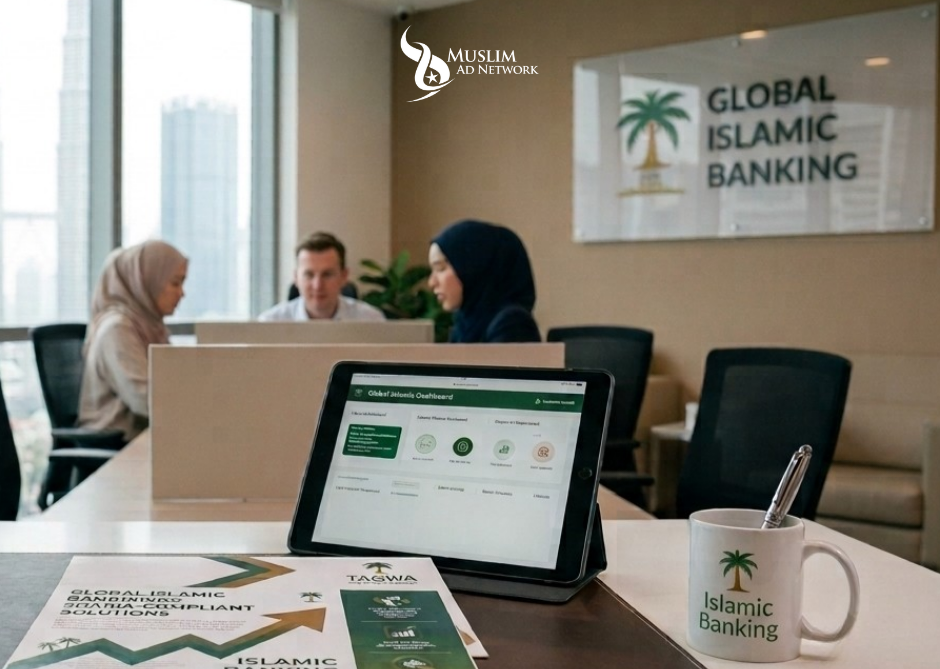

The Muslim demographic in the US and Canada is now mosthly young, educated, and increasingly affluent consumer and entrepreneurial class, and the sharia-compliant financial ecosystem built to serve them is maturing right alongside it. Yet the bridge between this affluent audience and the infrastructure built for it remains flimsy, even though both ends are strong.
The numbers behind the American Muslim economy
American Muslims are a genuinely unique economic force. There's no single racial majority within the community, it spans White, Asian, Arab, Black, and mixed-race Americans, and the population skews notably young, with most members under the age of 50. That combination of youth, diversity, and rising education levels has translated directly into dollars. Recent analysis puts the community's annual consumption at roughly $170.8 billion, alongside entrepreneurial output of about $46.9 billion, for a combined direct economic footprint north of $217 billion.
Entrepreneurship is a big part of that story. Estimates put the number of Muslim-owned small businesses in the U.S. at over 200,000, spanning healthcare, manufacturing, retail, and tech, and creating hundreds of thousands of American jobs. On the professional side, Muslim Americans are overrepresented in STEM, with 24% holding a STEM degree versus 18% of the general population, a gap driven partly by the fact that more than half of adult American Muslims were born abroad, compared to just 17% of Christians, bringing in skilled talent that helps fill gaps in the U.S. workforce.
The consumer spending trend is only accelerating. One estimate found the American Muslim consumer market's spending power grew from $110 billion in 2018 to $120 billion in 2020, with projections of it topping $250 billion by 2030.
Canada's version of the same story
North of the border, the picture is just as compelling. Canada's Muslim population grew from about 580,000 people (2% of the population) in 2001 to roughly 1.8 million (4.9%) by 2021, and more recent estimates put that figure above 1.9 million. Industry watchers describe that community as sitting on billions of untapped investment dollars, demand that Canadian halal finance providers openly admit they're still racing to catch up with, since the sector is, in the words of one Toronto fintech founder, still "nascent" enough that nearly everything in it is still an open opportunity.
Even something as basic as halal food shows the same trajectory. Canada's halal meat sector alone is forecast to reach around $300 million by 2031, growing on the back of both Muslim demand and mainstream interest in ethically sourced food.
Sharia-compliant finance is thriving, quietly
Islamic finance in North America isn't an experiment anymore. One estimate puts the U.S. market alone at roughly $250 billion today, spread across more than 40 institutions offering some form of sharia-compliant product, on a trajectory toward $400 billion by 2030. The catch is that awareness hasn't kept pace with supply: the same research found that a large majority of U.S. Muslims still don't know these options exist. Below is a fuller picture of who's actually building this ecosystem in the U.S. and Canada.
United States
Islamic home, auto, and business financing
Investment platforms, funds, and screening tools
Saturna Capital / Amana Funds, the oldest and largest family of Islamic-principle mutual funds in the U.S.
Takaful (Islamic insurance)
Canada
Banking, financing, and cooperative housing
Investment platforms and funds
The real gap: distribution, not demand
Here's the disconnect. Canadian advisors describe demand that's gone "through the roof" in just the last few years. Yet most sharia-compliant brands are still marketing the way conventional financial companies do: broad, faith-neutral campaigns that never actually reach the community that's most primed to convert.
That's the gap Muslim Ad Network exists to close. Generic financial advertising doesn't know how to target a Muslim investor. It's the difference between a shariah-compliant fund quietly managing billions for decades and that same fund becoming the default choice for millions of Muslims who don't yet know it exists.
Companies like Amana Funds by Saturna, UIF, Dhow, and Takaful America, have already figured this out. They're reached Muslim consumers directly rather than hoping generic finance marketing eventually finds them. The bigger opportunity is for every sharia-compliant company that is still sitting on the sidelines, doing great work that almost nobody in the community has heard of yet.
The Muslim economy in the U.S. and Canada isn't a future opportunity. It's already here, already worth hundreds of billions of dollars, and already actively looking for products built around its values. The only question left is which companies show up to meet it and win it.
Win your Muslim audience now, start your campaign here:
Or make your query here: sales@muslimadnetwork.com